RARE II — Preschool and Primary Education Support for Roma Children
Every Child Deserves a Confident Start at School
In Edirne, we develop an education model for preschool and primary-age children built on trust, play, learning, family support and cooperation between institutions.
We Looked for the Roots of the Problem in the Early Years
Our story began when we noticed children who struggled with basic literacy even though they had reached higher grades.
As we spoke with children and teachers, we saw that the problem did not begin at the school desk but much earlier. Some children started school without being adequately prepared for its language, routines and social environment.
Financial hardship, lack of access to preschool, limited space for learning at home, discrimination and difficulty reaching institutions all reinforced one another. And those with the least say in these conditions were the children themselves.
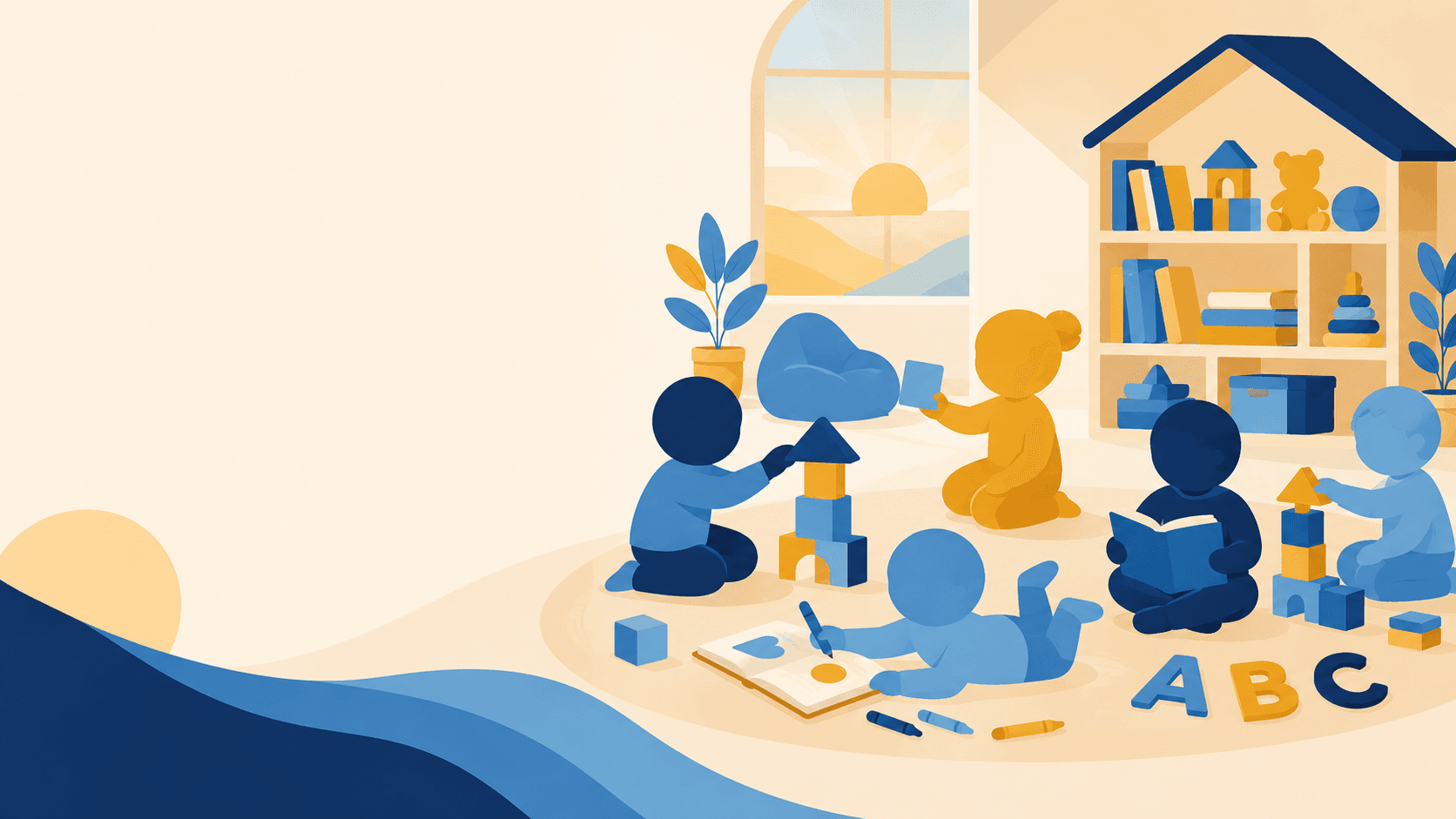
So we began not only by teaching lessons, but by building trust. In the Toy Library we created a space where children could play, express themselves and feel comfortable and safe.
Change became visible not in a big exam result but in a small behaviour: a child showing their mother how to wash hands at home, a previously silent child joining the group with a smile, or a family imagining a profession for their child’s future for the first time.
An equal number of desks, books or pieces of equipment does not, on its own, create equality in education. Children need quality education, individual attention, trusted adults and spaces where they can feel they belong.
For an Equal Start in Education
What is the problem?
In the early years of their education, Roma children face various barriers to accessing preschool education, enrolling in primary school and attending regularly. These barriers are too multi-faceted to be overcome by individual tutoring alone.
Why is the project needed?
The early years of education are decisive for a child’s adjustment to school and sense of belonging. The holistic support provided during this period helps the child bond with school and make a good start in learning.
Our Approach
The project aims to strengthen Roma children’s access to quality preschool and primary education, ease their transition to primary school, support regular attendance and increase families’ involvement in the education process. A holistic social-educational support mechanism is built between the child, family, school, neighbourhood and public institutions.
Sustainability
A new space has been allocated by the Edirne Municipality; work is under way to use it as a long-term, sustainable local education centre. The aim is for the approach developed in Edirne to become permanent and transferable to other local authorities.
2023–2026 · A Three-Year Journey
We accompanied the education journey of 240 children in total — 40 preschool and 40 primary pupils each year. Each number represents a distinct curiosity, a relationship of trust, a family and a future.
Total reached over three years (80 per year)
School readiness, play and language development
School adjustment, attendance and basic learning
Work carried out together with families
Children by year and education level
Gender distribution of children (three years)
Together with families: parent participation records
Beside the Child, Beside the Family
Preschool Support
Language development, colour-shape-number work, literacy readiness, fine motor skills, self-care, hygiene and emotion recognition.
Primary Support
Sound–letter correspondence, syllabification, reading, written expression, basic maths, homework support and adjustment to school.
Toy Library
An inclusive learning space where children play, learn, socialise and feel safe.
Family & Home Work
Regular home visits, parent meetings, applicable learning methods for home and guidance on the transition to school.
Mentoring & Volunteering
Building trust with the child, tracking development, monitoring absenteeism and connecting school, family and institutions.
Institutional Cooperation
Working with schools, the municipality and public institutions for attendance, health needs and sustainable local mechanisms.
Learning Continues at Home
A child’s education journey neither begins nor ends at school. Through home visits, parent meetings and applicable learning methods for home, we support children’s development together with their families. Families are not indirect stakeholders; they are core partners.
Together with Families
- Regular household and family visits
- Guidance on the importance of preschool and the transition to primary school
- Simple, applicable methods to support learning at home
- Building communication between teachers, schools and families
- Referral to public institutions when needed
Change observed in families
The change did not stay in the classroom or the Toy Library. Children carried what they learned home; families began to see their children’s skills, curiosity and development more closely. Some parents who initially had little hope for their child’s educational future began, over time, to imagine new dreams for them.
Care and education responsibility does not belong to mothers alone; the involvement of fathers and other caregivers is also supported.
The Change Behind the Numbers
Change often became visible not in a big exam result but in small yet meaningful behaviours.
When learning travelled home
Children who learned the steps of handwashing in the Toy Library began showing the same method to their parents at home. A small hygiene activity showed that the child was not just a recipient of information but an active subject who shared it with their family.
Where trust began
Some children, when they first arrived, struggled to speak, join the group or relate to adults. Instead of expecting quick results, the team observed them, respected their boundaries and made room for trust to build over time.
When a family’s dream changed
Some families who saw their children learning and developing replaced their initial hopelessness with dreams for the future. The impact of educational support was visible not only in the child’s skills but also in the family’s expectations of the child.
Voices from the Field
Parents Speak
In this video we sit down with parents to talk about how the children’s house has affected both their children and the families themselves — in their own words.
Equality Is More Than the Same Building
Equality in education is not merely having the same equipment in school buildings. Equality is every child being able to access quality education, individual attention, a relationship with a trusted adult, self-expression and a sense of belonging to the learning process.
Help this story reach more children.
Share the work, keep equality in education on the agenda and support scaling up this model.
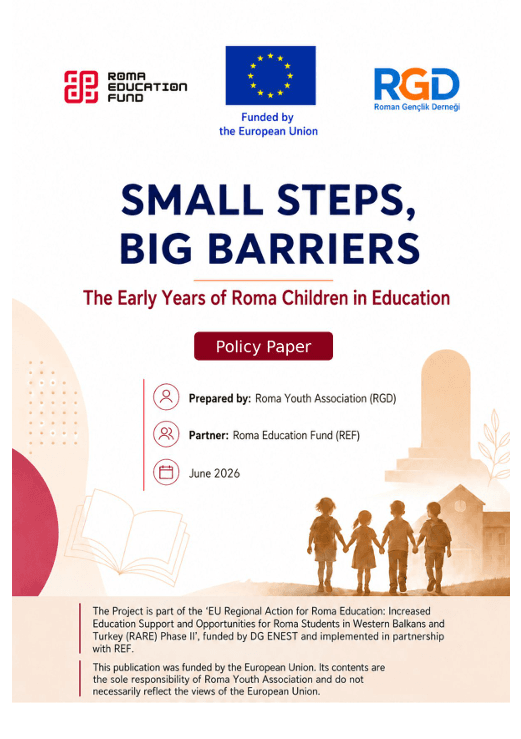
Small Steps, Big Barriers
Small Steps, Big Barriers was developed from the Roma Youth Association’s field implementation in Edirne (2023–2026) — including family engagement, school consultations, mentoring and attendance monitoring. It proposes an Integrated Early Education Support Model that brings together access to preschool and primary education, regular attendance, school–family communication, mentoring, the Toy Library and children’s social-emotional needs. It recommends a 12-month trial implementation in Edirne, followed by a 36-month phased expansion subject to a positive independent evaluation.
- Prepared by
- Roma Youth Association, Edirne
- Partner · Supporter
- Roma Education Fund (REF)
- Funding
- European Union
- Published
- June 2026
From Reaching Out to Making It Last
The project developed as a steadily deepening effort spanning the 2023–2024, 2024–2025 and 2025–2026 school years.
Reaching out and building trust
- Reaching children and families through neighbourhood and home visits
- Identifying educational needs and barriers
- Building a relationship of trust with families
- Establishing first connections with local institutions
Providing regular and holistic support
- Toy Library and educational support activities
- Mentoring, absenteeism monitoring and family meetings
- School cooperation and social-emotional development
- Building the capacity of mentors and volunteers
Making it last and taking it to policy level
- A new space allocated by the Edirne Municipality
- Local policy dialogue and advocacy
- Strengthening family participation
- Making the Edirne approach transferable
This Work Is Possible Together
European Union / DG ENEST
Funding.
Roma Education Fund — REF
Regional programme partnership and implementation structure.
Roman Gençlik Derneği (Roma Youth Association)
Local implementer in Turkey and the body responsible for site content.
Local Stakeholders
Edirne Municipality, the Provincial Directorate of National Education, schools and public institutions.
The Project is part of the “EU Regional Action for Roma Education: Increased Education Support and Opportunities for Roma Students in Western Balkans and Turkey (RARE) Phase II”, funded by DG ENEST and implemented in partnership with REF.
Get in Touch with the Project
You can contact the Roma Youth Association for project activities, cooperation and volunteering.